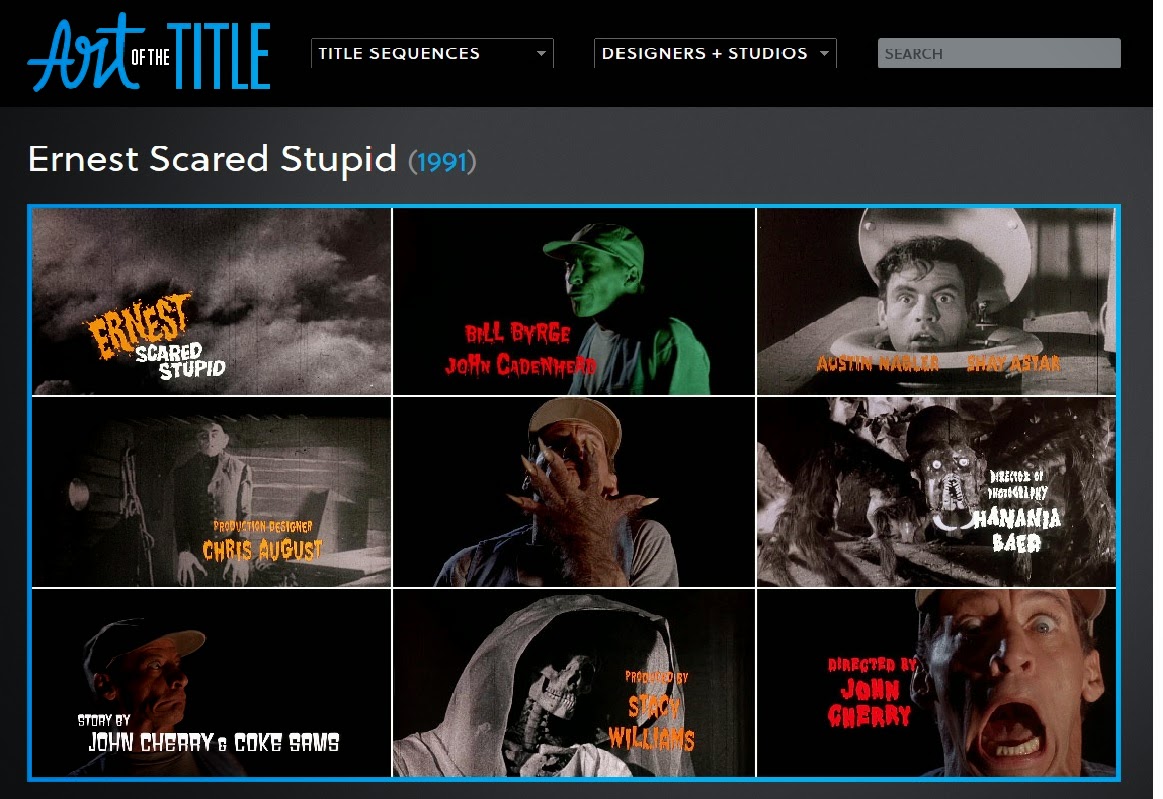
After you've decided on your film, make sure you discuss and blog about how you're going to include all the elements of an opening sequence.
The purpose of an opening title sequence to a film is to establish the visual style of the film and to introduce the viewer to all or some of the following:
Characters
Location
Narrative/Plot
Genre
Themes
Typically, an opening sequence will contain:
Details of cast and crew.
The film's title.
An introduction to character or character type.
Indication of place.
Indication of historical period.
Information regarding mood and tone.
Introduction to signature theme tune.
Information about genre.
Questions that the viewer finds intriguing.
Patterns and types of editing that will be echoed in the remainder of the film.
Mise en scene and cinematography that will be echoed or elaborated upon later in the film.
An area students often mess up this titles task will help you learn how film institutions help identify both the film and the production company involved, and to act as a signal to viewers that the film had started.
Choose one title sequences from films in www.artofthetitle.com
Screengrab each title in order, write down the jobs titles and seconds from the start so that you can and the length of each title. Write a summary discussing the various titles, fonts, colours, sound, effects and any meaning that may link them to the genre or narrative. Titles are numbered T1, T2 etc
Well done on your dancing animals and James Bond tasks, make sure you've uploaded them onto the blog. Hopefully you will be a little more familiar with Premiere. Now it's time to edit your own filmed footage.
In this task you will familiarise yourself with the cameras, practise your filming and editing techniques and stretch your premiere skills.
In your groups you will plan who will be Juno, the props you need, the locations and you will create a storyboard - number each shot, draw a sketch of shot, write down times for the length of shot, the type of shot and transition. For eg: Three seconds - low angle, close up, tilt up shot of face - straight cut.
Take a picture of your storyboard and upload onto your blog, youtube your Juno sequence and answer the evaluation questions:
You are editing your own footage - how did the filming go?
Was your storyboard accurate?
What were your strengths and weaknesses in the group?
Did you get all the footage you needed?
What technical skills either camera or premiere did you learn? How does it compare to the original?
What went well - What I learnt - What I will take with me to the next production
One day for planning, one for filming, one for editing and finally the evaluation of the task. Share the responsibilities equally.
The soundtrack is here U:\SHARED\Media and you will only need to copy up to the bit where she walks in front of the shops minute 1.04
Have a look at some big media companies and smaller companies and their logos and design your own. You will
then bring these to your film groups and select the best one.
Low budget V high budget institution comparison and analysis to be completed. Place onto a powerpoint and
upload onto the blog. Choose a big budget blockbuster and compare to a low budget film eg The Hobbitt vs In Fear. Do some research:
1)What are the main institutions used for each of the films? (in terms of production and distribution?) Find their logo and add it on.
2)How much money was used to produce each film? (The budget)
3)How much money was made from each of the films?
4)How well known are the production companies for both the high-budget and low-budget film?
5)List the differences between the high-budget film and the low-budget film in terms of the institutions.
6)List any similarities that exist between the high-budget film and the low-budget film in terms of the institutions.
7)What other films has the production company made? Were these as successful? Why/why not?
8)What genre of films does the company usually produce? Is this important when considering who could produce your film? Why?
9)What audiences do each of the institutions aim to appeal to? Is this reflected through their film choice, or does this vary?
10)Which institution do you feel outperforms the other and could claim to be more successful, considering your research? Explain your reasons.
Who creates the content the media or the audience?
Can the media exist/function without an audience? Can an audience (public) exist/function without media?
Who is more powerful: the media or the audience why/how?
Can the media control an audience?
2) Apply the following uses and gratifications to films that apply to you.
Uses and Gratifications
Personal Identification
Information
Entertainment
Social Interaction
-
3) Faculty programmes - Arts - Media - The Film Industry Complete Film and You and blog it
This clip is excellent for all the areas you have studied up until now - symbols, denotation and connotation, narrative, representation and audience. It is also great for DISTINCT. Write an intro on these for Boyz in the Hood and then:
Please analyse in terms of how camera, mise en scene, editing and sound give meaning to this clip.
More acronyms!
Camera - FAM
Mise En Scene - CLAMPS
Sound - McDoved
Editing - STOPS
Watch the first six minutes and apply your knowledge of camera, sound, editing and mise en scene to textually analyse the clip and the meaning that it created.
Consider:
- the symbolism in a lot of the shots
- sound / music, dialogue and sound effects
- what is the clip saying about race, how?
- what have these children seen that you wouldn't expect them to have seen at their age?
- How does the shot go from street to classroom?
- what are the pictures on the wall?
Matrix opening sequence consider:
- colour, binary oppositions, male/female - good vs evil
UP Consider how they show the passage of time, sound, mise en scene and camera.
Select a film opening of your choice and apply 3 of Barthes' narrative codes. Write a list of the shots in order, how long they last and what you see.
1. Identify the key actions within the opening - what kinds of actions are included and how is the narrative moved forward?
2. Identify the enigma codes within the opening - what kinds of questions are posed and how is the audience meant to read these codes?
3. Identify key characters and think about what they represent in the opening
4. Identify key themes and analyse how symbols are presented visually/technically.
In this lesson you were asked to identify conventions of particular film genres and we looked at the Nightmare on Elm Street film poster. You were then sent in groups and assigned a number of film genres to apply the conventions through your photography.
Blog about the task and the conventions applied as well as uploading the photos.
This powerpoint will help you remember the key issues around SEMIOTICS and concepts connected to that. It includes the Glee poster which we looked at. Key terms we learned today include: denotation; connotation; preferred reading; oppositional reading; polysemia. Remember to keep your glossaries updated as you learn new terms!
BLOG TASK: Upload a film poster of your choice, and analyse the semiotics used within it. Remember to focus on the connotations of the images, colours, etc.
Go to layout on your blogs and in add a gadget add labels. All your posts at the moment will have the label Research on the right hand side.
Upload your photos and apply the DISTINCT (setting, themes, icons, narrative, characters, textual analysis) and describe the genre and why you did what you did. Did it work? What went well/Even better if...
On your blog write about the following:
Watch the following film openings and describe what makes them the genre they are applying the DISTINCT conventions. Any hybrids? If so, how.